Walking Your Dog in Bear Country: An Alaska Dog Owner’s Safety Guide

Walking your dog in Alaska comes with some pretty spectacular perks: crisp air, mountain views, miles of beautiful trails—and the possibility that something much bigger than you is sharing the trail. Black bears and brown bears are a natural part of the Alaska landscape, and most would prefer to avoid an encounter with people. But add a curious, barking, or off-leash dog to the equation, and things can become complicated very quickly. Whether you’re heading deep into the woods or simply walking a neighborhood trail, knowing how to prevent a bear encounter—and what to do if one happens—is an important part of being a responsible Alaska dog owner.
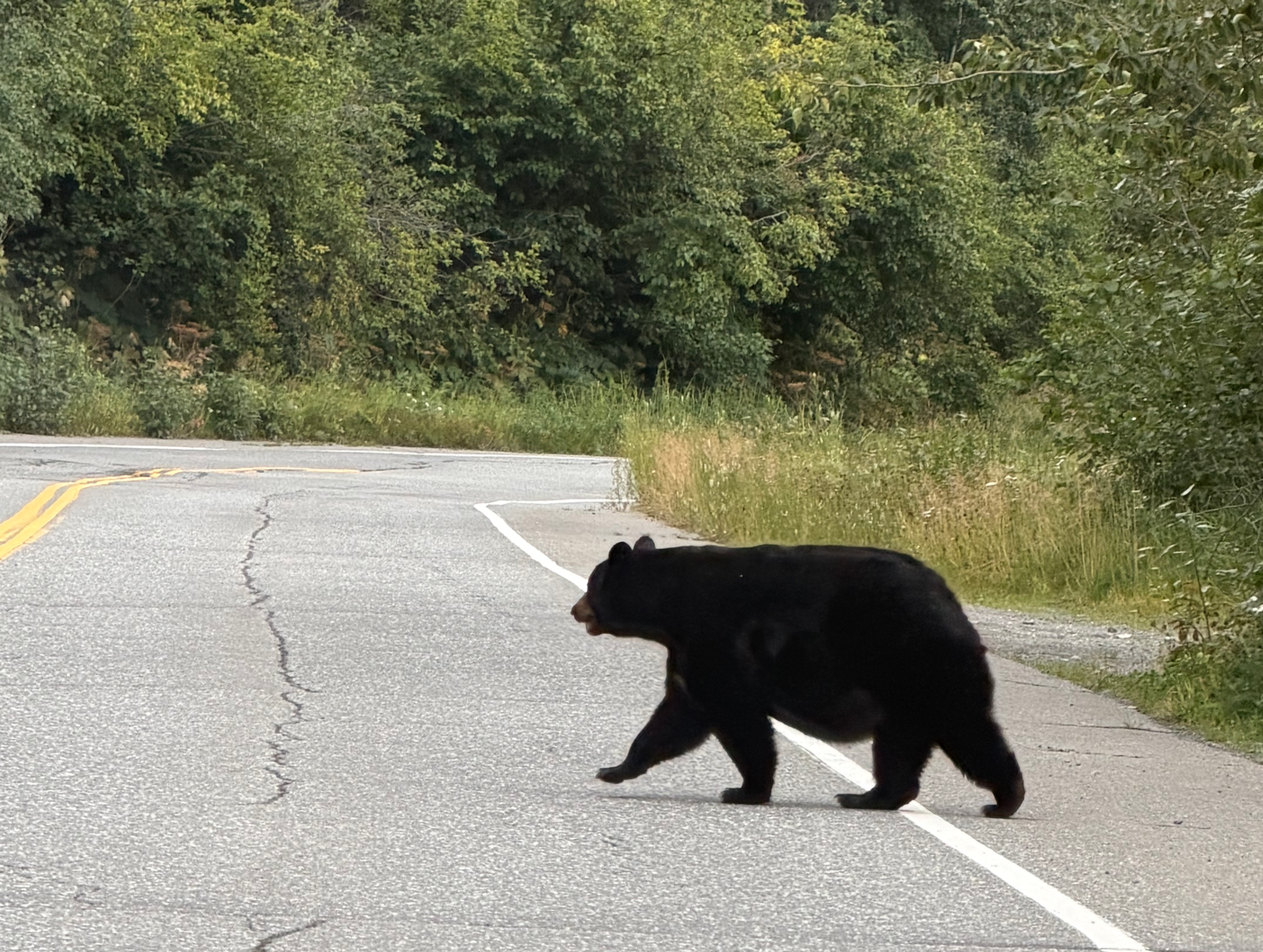
The Best Bear Encounter Is the One You Avoid
Bear safety begins long before you actually see a bear. Stay alert, look ahead, and make enough noise to avoid surprising wildlife, particularly when approaching blind corners, dense vegetation, streams, or other areas where visibility is limited. Skip the headphones or keep the volume low enough that you can hear what’s happening around you.
Pay attention to clues that bears may be nearby, including fresh tracks, scat, digging, or other signs of recent activity like tipped over garbage cans. Be particularly cautious around spawning salmon, animal carcasses, or other potential food sources such as walking on garbage collection day when there are lots of bins out on the streets. If the signs suggest a bear could be close, resist the temptation to investigate. Turn around, give the area plenty of space, and find another route. Your dog will be just as happy exploring somewhere else.
Keep Your Dog Close
Even the friendliest dog with excellent recall can behave unpredictably when confronted with a bear. A dog that runs toward a bear, barks at it, or gives chase can transform an encounter that might otherwise have ended quietly into a dangerous situation. Even worse, a frightened dog may run back to its owner—with an angry bear following close behind.
In bear country, keep your dog leashed and close enough that you can maintain control. A sturdy fixed-length leash gives you better control than allowing your dog to wander well ahead on a long or retractable lead.
Remember that your dog may smell or hear a bear before you do. If your normally relaxed pup suddenly becomes intensely interested in something in the woods, begins growling, raises its hackles, or seems unusually nervous, pay attention. Your dog may be telling you something is nearby even if you can’t see it.
Carry Bear Spray—and Be Ready to Use It
Bear spray won’t help you very much buried at the bottom of your backpack. Carry it somewhere secure but immediately accessible, such as a belt or chest holster, where you can reach it quickly while still maintaining control of your dog.
Check the expiration date periodically and familiarize yourself with your particular canister before heading onto the trail. Consider practicing with an inert training canister so that removing the safety and positioning the spray become familiar actions rather than something you’re attempting for the first time during a frightening encounter.
Bear spray is a last line of defense, not permission to take chances. Maintaining distance, avoiding surprises, and making good decisions on the trail remain your most important safety tools.
What If You See a Bear?
First, stay calm and keep your dog close. Never allow your dog to approach, bark at, or chase a bear.
If the bear hasn’t noticed you, quietly leave in the direction you came while keeping an eye on it. Don't approach for a better look or photograph.
If the bear has noticed you, don't run. Keep your dog under control, ready your bear spray, face the bear, and speak calmly so it can identify you as a person. Give the bear space and an obvious way to leave. Never intentionally move between a mother and her cubs.
A bear standing on its hind legs isn't necessarily being aggressive. It may simply be trying to get a better look or smell to determine what you are. Instead of reacting to one behavior alone, remain calm and pay attention to what the bear does next.
If a Bear Approaches
This is when preparation matters.
Keep your dog with you, do not run, and have your bear spray ready. If the bear continues to approach within the effective range of your spray, use it according to the manufacturer's directions. Alaska Department of Fish and Game recommends deploying bear spray at close range and emphasizes practicing with your particular product before you need it.
What happens next depends on the circumstances. There is an important distinction between a defensive bear—such as one that has been surprised or is protecting cubs or food—and the much less common bear that persistently approaches or treats a person as potential prey. Advice about fighting back versus playing dead differs depending on the situation and bear behavior. Alaska dog owners who spend time in bear country should learn those distinctions from current Alaska Department of Fish and Game guidance before an encounter occurs rather than trying to figure them out in the moment.
Your Dog-Walking Bear Country Checklist
Before you hit the trail, take 30 seconds for a quick check:
✓ Dog securely leashed — Keep your dog close and under control.
✓ Bear spray accessible — Carry it on your body, not buried in your backpack.
✓ Bear spray checked — Know how to remove the safety and check the expiration date.
✓ Eyes and ears open — Pay attention to the trail rather than your phone or headphones.
✓ Make your presence known — Especially around thick brush, blind corners, streams, and other low-visibility areas.
✓ Watch for bear sign — Tracks, scat, digging, carcasses, salmon, and other signs are good reasons to be extra cautious.
✓ Know your exit — If you see a bear, be willing to turn around. Finishing your planned route isn't worth a dangerous encounter.
✓ Never let your dog investigate a bear — No photo, sniff, or closer look is worth the risk.
✓ Never run from a bear — Stay calm, control your dog, and follow appropriate bear-safety procedures.
✓ When in doubt, turn around — There will always be another walk.
Respect the Wild Side of Alaska
Sharing our trails and neighborhoods with wildlife is one of the things that makes living in Alaska so extraordinary. Seeing a bear from a safe distance can be an unforgettable experience—but our goal should always be to keep that distance safe for people, dogs, and bears alike.
Our dogs depend on us to make the decisions they can't. Keep your pup close, stay aware of your surroundings, carry accessible bear spray, and never be afraid to change your plans when wildlife has claimed the trail ahead.
A little preparation and a healthy respect for Alaska's wild neighbors can help you and your dog keep enjoying the trails together for years to come.
Happy trails—and when a bear has the right of way, let it have the whole trail.


Comments