Winter Dog Walking in Alaska: How to Keep Your Dog Safe in the Cold

Alaska dogs are a hardy bunch—or at least some of them are. Your fluffy Malamute may think that 10°F is perfect walking weather, while your short-haired Chihuahua is reconsidering every life choice that led to the front door. No matter the breed, winter in Alaska brings challenges that every dog owner needs to consider. Cold temperatures, ice, snow, darkness, road chemicals, and even snowballs between the toes can turn an ordinary walk into an uncomfortable—or potentially dangerous—outing. The good news is that with a little preparation, you and your pup can keep enjoying your walks throughout our long Alaska winter.

How Cold Is Too Cold?
Unfortunately, there isn't one magic temperature that tells us when it's too cold to walk a dog. A dog's ability to tolerate cold depends on its breed, size, age, coat, body condition, health, activity level, and what kind of weather it's accustomed to.
A young, healthy Husky with a thick double coat may happily romp outside at temperatures that make a small, short-haired dog miserable within minutes. Puppies, senior dogs, small dogs, thin dogs, and dogs with short coats may need extra protection or much shorter outings.
Wind matters, too. A calm 10°F afternoon can feel very different from 10°F with a strong wind blowing across an exposed trail.

Instead of watching the thermometer alone, watch your dog. Shivering, repeatedly lifting paws, slowing down, whining, hunching the body, tucking the tail, or trying to turn toward home are all signs that your dog may be getting too cold. Don't make your dog finish the planned route just because you aren't cold yet.

Protect Those Paws
Your dog's feet take the brunt of an Alaska winter.
Ice can become packed between paw pads, and snow can form uncomfortable balls in the fur between the toes. Road salt and chemical deicers may irritate paw pads and can be harmful if your dog licks residue from its feet afterward.
Dog boots can provide excellent protection from cold surfaces, sharp ice, and deicing products. Not every dog is immediately enthusiastic about footwear, so introduce boots at home with plenty of treats and practice before expecting your pup to hike comfortably in them.
If boots aren't an option, paw wax or balm may provide some protection. After walks, inspect your dog's feet, remove ice and snow, and wipe or rinse the paws to remove salt and other chemicals. Keep the fur between the paw pads neatly trimmed if your dog's coat tends to collect snowballs.

Dress for the Dog You Have
There's no prize for being the toughest dog on the trail.

Short-haired, small, lean, elderly, and cold-sensitive dogs may benefit from a well-fitting coat or insulated jacket. Look for something that protects the chest and torso while allowing your dog to walk and relieve itself comfortably.

At the other end of the spectrum, heavily coated northern breeds may need little additional insulation during an ordinary walk. In fact, overheating can become a consideration during vigorous activity even in winter.
Choose winter gear based on your individual dog, not simply on what the other dogs on the trail are wearing.

Darkness Is Part of Winter Walking
For much of an Alaska winter, dog walking means walking in the dark. Visibility isn't just about helping you see where you're going—it's about making sure drivers, cyclists, snowmachines, and other trail users can see you and your dog.
Reflective leashes, collars, harnesses, and jackets can make your dog much easier to spot. A small LED light attached to a collar or harness provides additional visibility, while a headlamp keeps your hands free for managing the leash.

Don't forget about yourself. Reflective or high-visibility clothing can make you much easier for motorists to see along dark neighborhood streets.
Ice Is Dangerous for Both Ends of the Leash
Your dog may have four-wheel drive, but unfortunately, you don't.
Icy sidewalks and trails create a fall risk for both dogs and their humans. A normally manageable dog suddenly pulling toward a snowshoe hare can become a much bigger problem when you're standing on glare ice.
Wear footwear with good winter traction and consider removable ice cleats when conditions warrant them. Keep your dog's leash short enough to maintain control, especially near roads, hills, stairs, and particularly slippery areas.
Older dogs deserve additional consideration. Arthritis, weakness, or balance problems can make slick surfaces especially challenging, and a hard fall may cause an injury. Sometimes the safest winter walk is a shorter route on better footing.
Watch for More Than the Weather
Cold isn't the only winter hazard.
Antifreeze is particularly dangerous to pets and requires immediate veterinary attention if ingestion is suspected. Don't allow your dog to drink from mysterious puddles or lick liquids from driveways, parking areas, or garages.
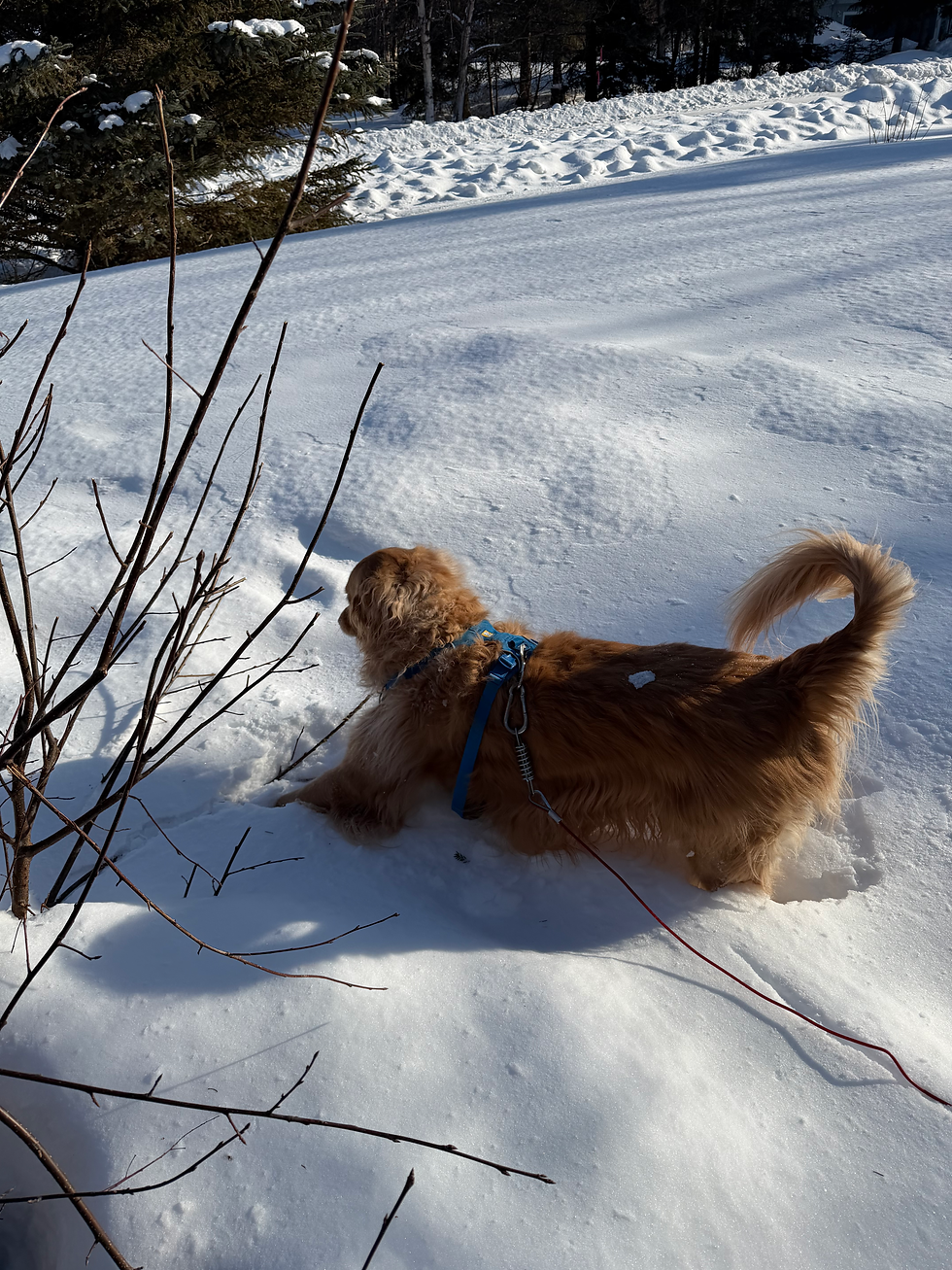
Deep snow can also be surprisingly exhausting, particularly for small dogs or dogs that aren't accustomed to it. Snow can conceal sharp objects, uneven terrain, holes, ice, and other hazards.
And remember: Alaska wildlife doesn't disappear when winter arrives. Moose are frequently encountered on neighborhood streets and trails during winter, and deep snow can make them stressed and less willing to move out of your way. Keep your dog under control and give wildlife plenty of room.
Your Alaska Winter Dog-Walking Checklist
Before heading outside, take a quick inventory:
✓ Check the temperature, wind, and conditions — Don't rely on temperature alone.
✓ Consider your individual dog — Breed, coat, size, age, health, and cold tolerance all matter.
✓ Protect the paws — Boots or paw protection can help with ice, cold, salt, and deicers.
✓ Dress appropriately — Cold-sensitive dogs may benefit from a coat or insulated layer.
✓ Be visible — Use reflective gear, lights, and a headlamp during dark walks.
✓ Check your own traction — Good boots or ice cleats can help keep the person holding the leash upright.
✓ Keep your dog under control — Winter wildlife and slippery footing make a reliable leash especially important.
✓ Inspect paws afterward — Remove snow and ice and clean away salt or deicing chemicals.
✓ Watch your dog — Shivering, paw lifting, slowing down, or trying to go home means it's time to get warm.
✓ Be willing to shorten the walk — Some days are better suited to a quick potty break and indoor enrichment.
Sometimes the Best Walk Is a Short One
Living in Alaska means learning to work with winter rather than waiting for it to go away. Our dogs still need exercise, enrichment, fresh air, and opportunities to sniff—even when the thermometer isn't particularly inviting.
But being a good winter walking companion also means knowing when enough is enough. Pay attention to your dog, protect those paws, dress appropriately, stay visible, and adjust your route and walking time to the conditions.
And on those truly brutal Alaska days? A quick trip outside followed by a warm house, a puzzle toy, and a cozy spot on the couch may be exactly the adventure your dog needs.
Stay warm, stay visible, and happy winter trails!


Comments